Viewing 1 - 6 out of 82
Article

Precancers & Skin Cancers
Actinic Keratoses
Actinic keratoses (AKs) are precancerous skin growths caused by long-term exposure to ultraviolet (UV) radiation, typically from sunlight or tanning beds. These lesions frequently appear on sun-exposed areas—such as the scalp, face, dorsal hands, and forearms—and are characterized by rough, scaly

Precancers & Skin Cancers
Squamous Cell Carcinoma
Squamous cell carcinoma is the second most commonly occurring type of skin cancer. It appears most frequently in areas that are exposed to direct sunlight, such as the face, nose, ears, lips, neck, and back of the hands. Squamous cell carcinomas can present as rough, scaly, red patches; wart or horn-like
Skin Conditions
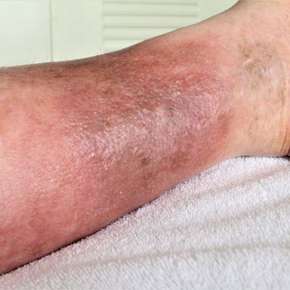
Stasis Dermatitis
Stasis dermatitis is a type of eczema that develops on the lower legs as a result of poor circulation. In affected people, the valves in the deep leg veins that help push blood back to the heart begin to fail, leading to the leakage of fluid, varicose veins, and subsequent swelling of the lower legs.
Skin Conditions
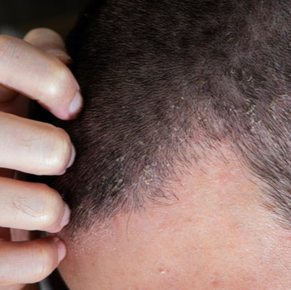
Seborrheic Dermatitis
Seborrheic dermatitis is a very common skin condition which presents with itchy, red patches of skin, greasy scales, and flaking. Common areas of involvement include the scalp, ears, eyebrow region, and sides of the nose. It typically occurs in infants younger than 3 months of age and in adults ages

Precancers & Skin Cancers
Melanoma
Melanoma is a type of skin cancer originating from the pigment producing cells in the skin called melanocytes. Though not as common as basal cell carcinoma and squamous cell carcinoma, it is more deadly because of its ability to spread to other parts of the body. Melanomas can have various appearances.

Infections & Infestations
Genital Herpes
Genital herpes is a sexually transmitted infection caused by an infection with the herpes simplex virus (HSV). There are two types of the herpes simplex virus- herpes simplex virus type 1 (HSV-1) and herpes simplex virus type 2 (HSV-2). Either type can cause genital herpes, but HSV-2 is responsible for
OUR LOCATION
Goyal Medicine and Dermatology
Address
3801 International Dr, Ste. 211
Silver Spring , MD 20906, US
Contact Information
Monday
9:00 am - 4:00 am
Tuesday
9:00 am - 4:00 am
Wednesday
9:00 am - 4:00 am
Thursday
9:00 am - 4:00 am
Friday
9:00 am - 2:00 am
Weekend
Closed
HOURS OF OPERATION
Monday
9:00 am - 4:00 am
Tuesday
9:00 am - 4:00 am
9:00 am - 4:00 am
Wednesday
Thuirsday
9:00 am - 4:00 am
9:00 am - 2:00 am
Friday
Weekend
Closed